Mousai Industries
UNCOVERING PHOTOGRAPHY WITH INANIS
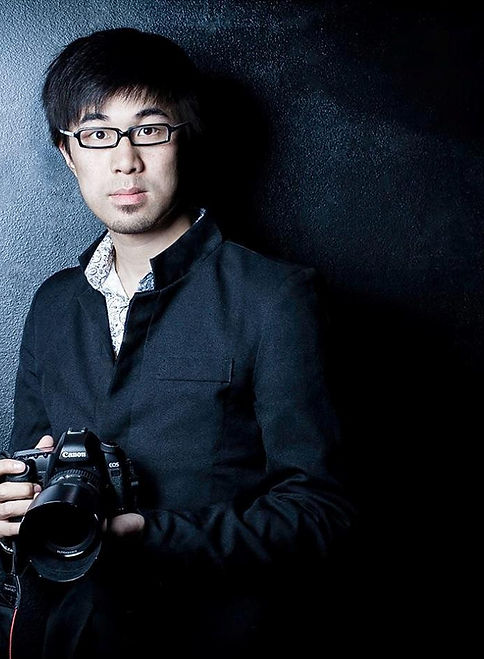

The American author Kim Edwards once said, “photography is all about secrets., the secrets we all have and will never tell.” How true is that? We can only guess about the secrets of people in the photographs, but we can definitely try to uncover some secrets of the art of photography. Mousai Industries bombshell Kate Loran talked about photography and inspiration with Nicolas Tath, also known as Inanis.
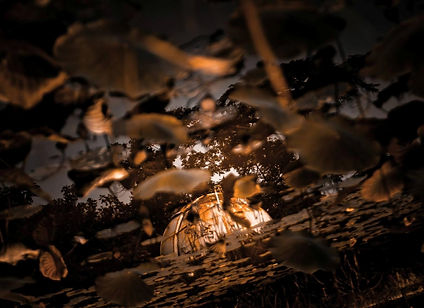
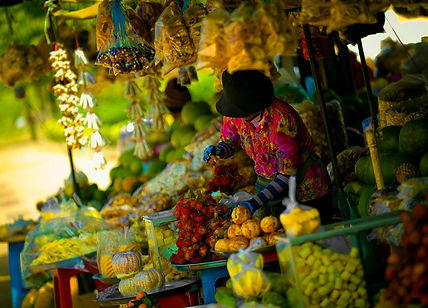
Inanis is a portrait and event photographer. He’s one of the founders of a French company Follow Event. Passionate about sports, fashion and his work, Inanis states that his goal is to transmit the atmosphere through his photos and find beauty in people he meets. He was the director of photography in the recently presented short film “En Forêt, Les Souffles Sombrent” (In the forest, murmurs sink). Last year Inanis had two exhibitions: “Kâmpŭchea” (Cambodia) and "De L’Autre Côté Du Miroir" (On the other side of the mirror). He is looking forward to pushing the boundaries in creating new projects and exploring the world.
1. What does the photographer see does not easily catch an ordinary person’s eye?
It’s not easy to answer this question. I still think I’m an ordinary person. If you are in the same room as I, I will see the same things as you, except, I’m going to focus on some details like the light in the room or put a virtual frame on anything I could possibly shoot.
2. What is a professional photographer, in your opinion?
First, a professional photographer is registered (so he has to pay taxes). Secondly, a professional photographer has the knowledge and the skills to complete a piece of work from the beginning, meeting the client, to the end, delivering the photos. Being a photographer is not only about taking pictures or pressing the button at the right time.
3. What affects the value of a photo? What does it consist of?
Actually, I’m still wondering. Photography is an art. It’s not objective. So, the value of a photo depends on the people who see it. It depends on how they are touched by it and how it affects their memory. So, it can depend on the people in it and it can depend on the context. Then, it depends on who is taking the photo.
4. For you, how important is content versus form. Do you think one plays a stronger role than the other?
In my early years as a photographer, form was very important. I did care a lot about technique and equipment. But for some months now, those items are no longer important. It’s all about the content. So, yes, one plays a stronger role because the most beautiful and expensive camera needs a subject. And if the subject is marvelous, you can have a great photo with a cheap camera.
"I am proud to introduce to you, Inanis."
5. Can photos taken on a mobile phone be considered on a par with professional photographs as art?
For me, this is obvious. Yes. It’s not about the camera.
1. Why do you take photos?
Because I am in love with photography. Because I love to shoot what/who I love.
2. What do you want your viewers to take away from your work?
There is beauty inside every single person and I try to reveal it in my photos. I don’t want to impose my style. I just want to reflect what I feel wherever I am.
3. Tell us about your first works? How did your close surrounding react to them?
I shot a lot of parties in my first works for my former school. People liked my photos because they were good to show. No alcohol glasses, no cigarettes, no drunk people. I was very corporate.
Part I
Photography
4. When you are shooting, how much of it is instinctual versus planned?
I guess 50/50. It depends on the project, the model, the demand. In my work now I like to improvise a little bit because I have the skills to do it but sometimes I have a good idea I really want to do. So in that case it’s totally planned.
5. How does black and white vs color play into your work? Do you find them to be totally separated or complimentary?
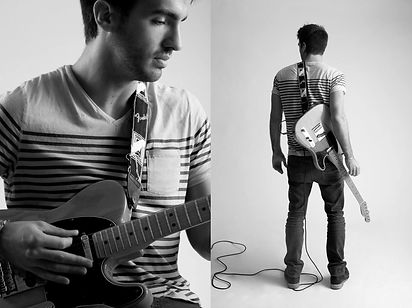
To answer quickly, black and white is more noble, more classical, more pure. Black and white is perfect to show facial expressions. But we live in color. Nature is beautiful because of its color. I feel in color. Sometimes there are too many colors for what I am trying to communicate so I turn my work in black and white.
6. Where do you get ideas and inspiration for your work?
Magazines, movies, painting and… my muse.
7. What is a muse to you? Is it important to have one?
I don’t think every artist has a muse. An artist doesn't necessarily need one to create and to make some great art. But in my case, I do have one and I feel very grateful and lucky to have met her. She is rare and precious. When you have a muse, you don’t need to think, don’t need to search. Everything seems easy because she turns everything into beauty.

1. Among your works and projects, which one is your favorite? Why?
It’s hard to say that but any project with my muse makes me more concerned, more motivated, more interested, gives me more energy.
Part II
Inspiration
Images Courtesy of Inanis
2. Were there any funny or extreme cases during your career?
Funny cases are my school years, the parties I went to and especially the photos I did not shoot on purpose. Extreme case is a wedding last year when my external hard disk broke. I lost all my work and ruined the most beautiful day of two very nice people. I was actually saving my data. I can’t blame myself but this is so regrettable. Fate.
3. Who would you like to take photos of?
I want to shoot passionate people from anywhere in the world, spend some time with them, hear their stories, then share them.
4. Tell us something about your future plans and projects?
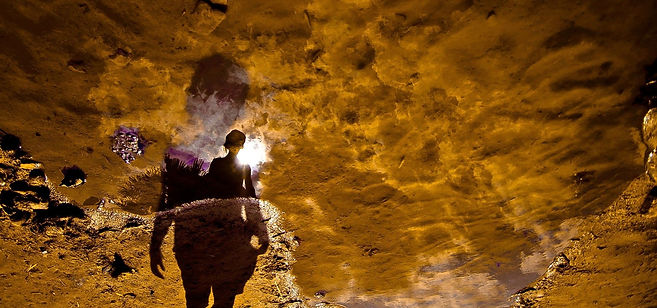
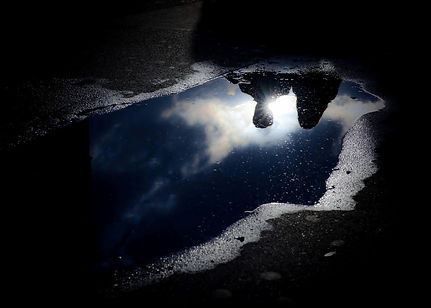
With some very good friends, we have the project of making a book on the Mad Hatter based on Alice in Wonderland and Through the Looking-Glass. One friend is writing the new story, another is making the illustration art work and I will add my pictures.
5. What are some tips/advice you would give to yourself if you started photography all over again?
-
Open your eyes, you need to educate them, cultivate them anytime.
-
Try to look at why you like your favorite pictures, and find out how to do the same.
-
Try to find where the beauty of your subject is.
-
Make a choice. A great photo is rarely complicated. You need to focus.
Part III
Plans
Images Courtesy of Inanis




follow event website:
Kâmpŭchea: http://kampuchea.overblog.com/
You can follow more of Inanis work on his Twitter, Instagram, or Follow Event website!
Images Courtesy of Inanis
Images Courtesy of Inanis
Images Courtesy of Inanis
Images Courtesy of Inanis
Images Courtesy of Inanis
Images Courtesy of Inanis